



Frequently Asked Questions About Chemical Etching
-
What is chemical etching?
Chemical etching is a subtractive manufacturing process that uses a chemical solution to remove material from a metal or glass substrate and leave a precise design, pattern or functional component behind. A photosensitive resist is applied to the sheet, exposed to UV light through a photomask, and the unprotected metal is dissolved in an acid or alkaline bath. The result is a burr-free part with fine detail and no tool marks.
-
Which materials can be chemically etched?
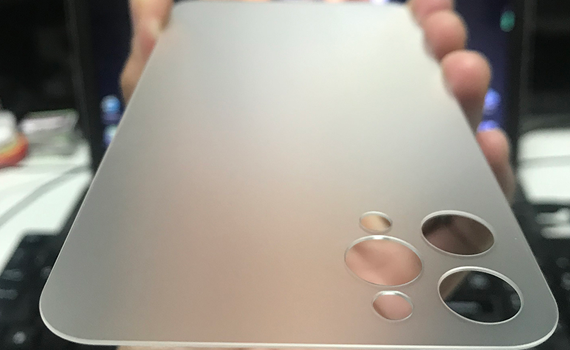
Golden Eagle etches stainless steel, aluminium, copper, titanium, nickel and glass. Stainless steel is used for springs, diaphragms, screens, filters, sieves, automotive interiors and heat exchanger plates. Aluminium serves precision components for electronics, mobile phones, audio systems, home appliances and machinery. Copper is used for precision fixtures and structural components, with flatness reaching 0.02 mm. Titanium supports lightweight aerospace and automotive parts, nickel is used for semiconductor interconnect lines, and glass for art, decoration, jewellery and LED packaging.
-
How does the chemical etching process work?
The process runs in six steps. First the design is created digitally in CAD and transferred to a photomask that acts as a stencil. The metal sheet is then coated with light-sensitive photoresist. The photomask is placed over the sheet and exposed to UV light, hardening the resist where light passes through. The unexposed resist is developed away, and the exposed metal is etched in a chemical bath. Finally the remaining resist is stripped and the part is cleaned and finished.
-
How precise is chemical etching?
Chemical etching produces high-precision parts with fine details and complex shapes that are difficult to achieve by conventional machining. On copper, the flatness of the etched plate can reach 0.02 mm. Because the process is chemical rather than mechanical, edges are burr-free and there is no tool wear or cutting marks to distort the design.
-
What is the minimum order and turnaround time?
Because no tooling is required, chemical etching suits both prototyping and production runs, which makes it economical for small and large quantities alike. Golden Eagle runs an in-house JM650 DES LINE etching line and LED exposure machines, which supports short-run prototypes through mid-volume production. Lead time depends on size, material, thickness and quantity, and can be quoted with your drawing.
-
What do I need to send to get a quotation?
Send your design drawings in CAD or vector format. If you do not have a layout ready, the Golden Eagle technical team can design the photomask layout for you. Material, thickness, size, quantity and any post-etch requirements such as electroplating, colouring, forming or stamping should be specified so the correct process and price can be proposed.
-
What post-etch finishing is available?
After etching the part can be electroplated, coloured, formed or stamped as required. Parts also go through a dedicated quality inspection department before shipment, so every item is checked against the drawing and surface finish requirements.