
Electrochemical etching vs chemical etching
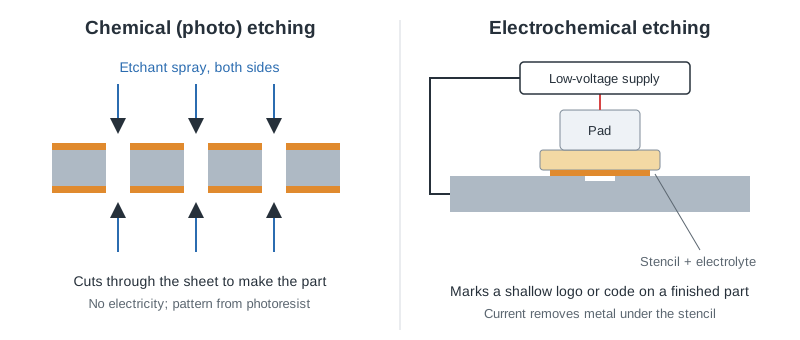
Chemical etching removes metal with a liquid etchant through a photoresist mask and needs no electricity. Electrochemical etching removes metal with an electric current passed through an electrolyte and a stencil. In practice chemical etching is used to manufacture thin metal parts and deep patterns, while electrochemical etching is mostly used to mark logos, serial numbers and scales on finished parts.
Comparison at a glance
| Factor | Chemical (photo) etching | Electrochemical etching |
|---|---|---|
| What removes the metal | Chemical reaction with an etchant such as ferric chloride | Electric current through an electrolyte (anodic dissolution) |
| Mask | Photoresist imaged from a phototool | Stencil held against the part |
| Main use | Making parts: meshes, shims, contacts, shields, plates | Marking: logos, serial numbers, scales, data codes |
| Depth | Through the full thickness, or controlled half-etch | Shallow, typically a few microns to a few hundredths of a millimetre |
| Workpiece | Flat sheet or foil, 0.05 to 5.0 mm | Finished parts of almost any shape, one area at a time |
| Metals | Stainless steel, copper alloys, nickel alloys, aluminium, titanium and more | Any conductive metal; most common on stainless steel and tool steel |
| Throughput | Whole sheets with many parts at once | One mark at a time |
| Equipment | Coating, exposure, developing and spray etching lines | Small bench-top marking unit |
How chemical etching works
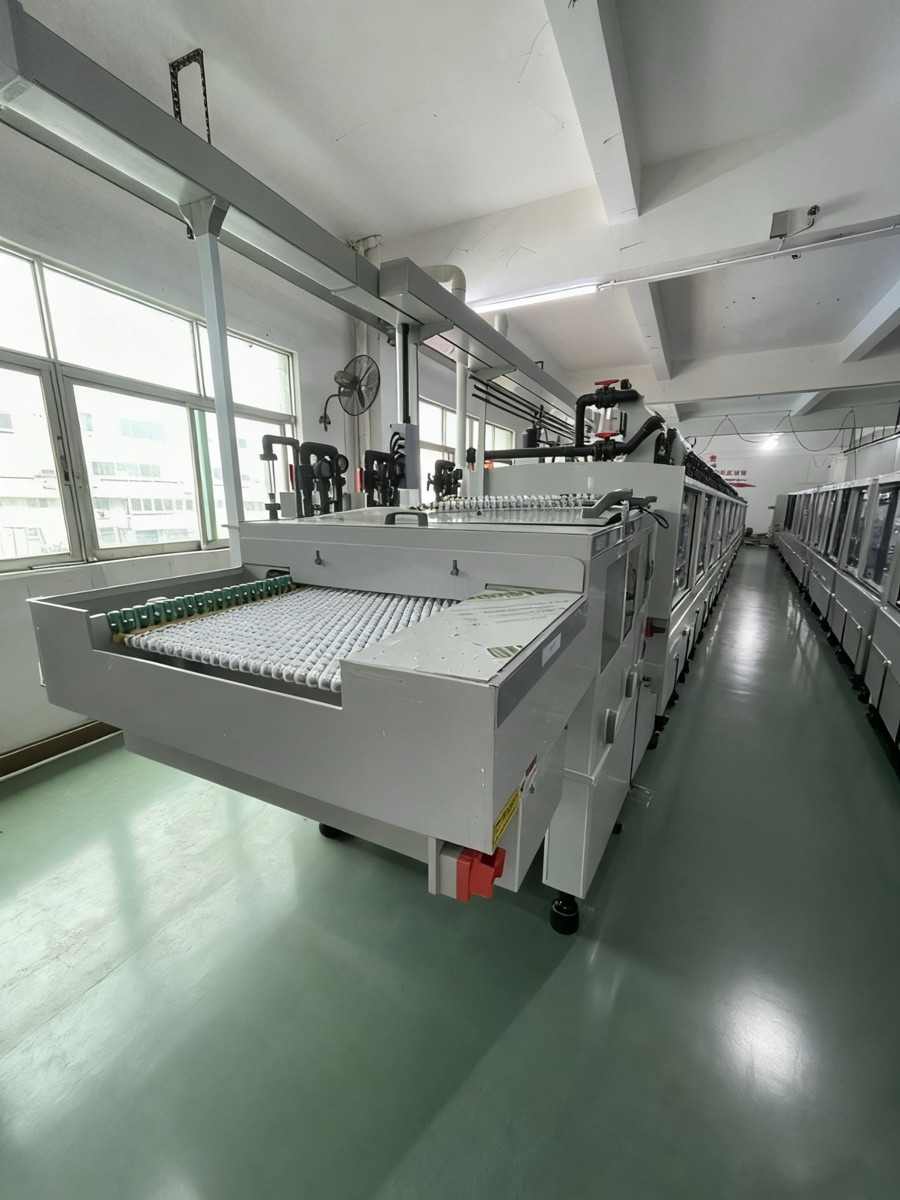
The sheet is cleaned and coated with photoresist. The pattern is exposed with UV light through a phototool and developed, leaving bare metal where material is to be removed. Etchant is sprayed on both sides until the openings break through, then the resist is stripped. Every feature on the sheet is produced at the same time. The steps are described in detail in the etching process step by step.
How electrochemical etching works
A stencil carrying the mark is placed on the part. A pad soaked in electrolyte is pressed on top and connected to a low-voltage supply, with the part as the other pole. Current flows only through the open areas of the stencil and dissolves or oxidises the surface there. Direct current gives a shallow etched mark; alternating current gives a dark oxide mark.
A related industrial process, electrochemical machining (ECM), uses a shaped tool electrode and high current to form three-dimensional shapes in thick, hard parts such as turbine blades. It is a different process from both of the above.
Which one to choose
- You need metal parts cut from sheet such as filters, shims, springs, shields or lead frames: chemical etching.
- You need a deep or large-area pattern, or nameplates and panels in quantity: chemical etching.
- You need to mark a logo or number on parts that are already machined or assembled: electrochemical marking.
- You need a 3D cavity in a thick, hard part: electrochemical machining.
Golden Eagle provides chemical etching. For stainless steel see the stainless steel etching process and which etchant is used for stainless steel; for other comparisons see photo etching vs laser cutting and chemical etching vs engraving.
Request a quote
Send your drawing in DXF, DWG, STEP or PDF format with the material and grade, thickness, quantity and required delivery date through our contact page. We check manufacturability against the drawing before tooling. Sample lead time is typically 3 to 7 working days. Drawings are treated as confidential.
Electrochemical etching vs chemical etching: FAQ
What is the difference between electrochemical etching and chemical etching?
Chemical etching dissolves metal with an etchant through a photoresist mask and uses no electricity. Electrochemical etching dissolves metal with an electric current passed through an electrolyte and a stencil. The first is used to manufacture parts from sheet, the second mainly to mark finished parts.
Is electrochemical etching deeper than chemical etching?
No. Electrochemical marking is shallow, typically from a few microns to a few hundredths of a millimetre. Chemical etching can cut through sheet up to several millimetres thick or produce a controlled half-depth etch.
Which process is used for stainless steel?
Both. Stainless steel parts, meshes and nameplates are made by chemical etching, usually with ferric chloride. Logos and serial numbers on finished stainless steel products are often added by electrochemical marking.
Is electrolytic etching the same as electrochemical etching?
Yes. Electrolytic etching, electro-etching and electrochemical etching are different names for removing metal with current in an electrolyte.