
Etched EMI and RF shielding
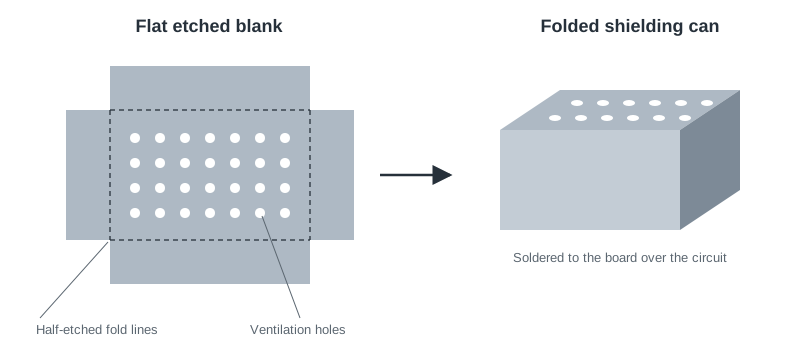
Photo etching produces board-level EMI and RF shielding cans, frames and covers from thin sheet without hard tooling. Outlines, ventilation holes and half-etched fold lines are made in one run, so a custom shield can be prototyped quickly and the same design scaled to production.
Why shields are photo etched
- No tooling cost. A custom shield does not need a stamping die, which suits prototypes and small and medium batches.
- Half-etched fold lines. Bend lines are etched into the flat blank, so walls fold accurately by hand or in a simple tool.
- Free complexity. Ventilation patterns, cut-outs for tracks and components, solder castellations and part numbers add no cost.
- Fast design changes. A board revision needs only a new phototool.
Shield types
| Type | Description |
|---|---|
| One-piece can | A flat blank with half-etched fold lines, folded into a five-sided can and soldered to the board. |
| Two-piece frame and cover | A soldered frame with a removable cover, so components can be inspected or reworked. |
| Flat covers and partitions | Lids, dividers and compartment walls for multi-cavity shields. |
| Gaskets and contact fingers | Etched spring fingers and flat gaskets that close gaps between housings. |
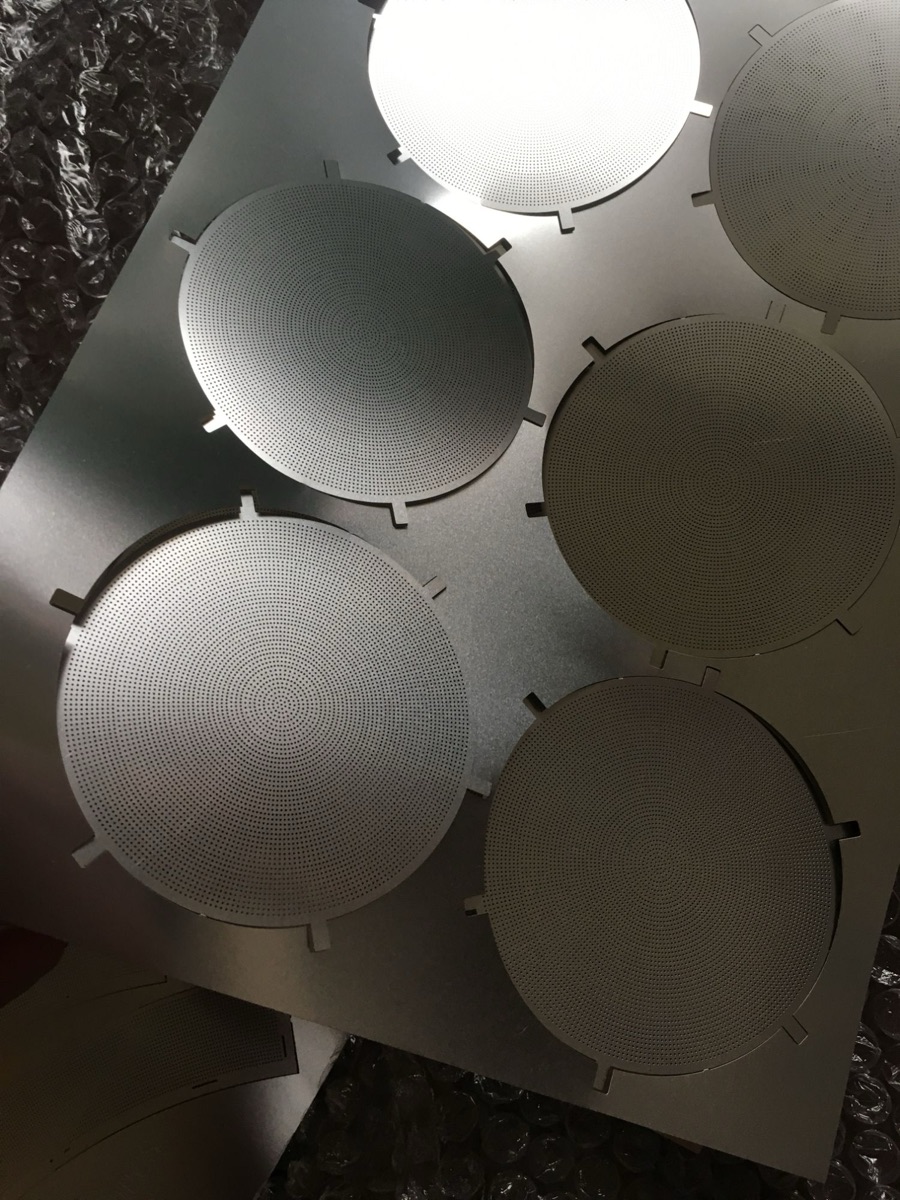
| Perforated shielding screens | Flat or formed screens with a fine hole pattern, which block interference while letting air or sound pass. |
Materials
| Material | Why it is used |
|---|---|
| Nickel silver | Solders directly without plating and resists corrosion; the most common choice for board-level cans. |
| Brass and copper | High conductivity; usually tin plated for solderability. |
| Stainless steel | Strength and corrosion resistance where the shield is clipped or welded rather than soldered. |
| Phosphor bronze and beryllium copper | Spring properties for contact fingers and gaskets. |
Design notes
- Keep ventilation holes small relative to the wavelength of the frequency being shielded.
- Add half-etched fold lines on the inside of each bend.
- Add small tabs or castellations along the bottom edge to improve solder joints.
- Include a half-etched part number or pin-1 mark for assembly.
General limits on hole size and tolerance are in the chemical etching design guide.
Request a quote
Send your drawing in DXF, DWG, STEP or PDF format with the material and grade, thickness, quantity and required delivery date through our contact page. We check manufacturability against the drawing before tooling. Sample lead time is typically 3 to 7 working days. Drawings are treated as confidential.
Etched EMI and RF shielding: FAQ
What material is best for an EMI shielding can?
Nickel silver is the most common choice for board-level cans, because it solders directly without plating and resists corrosion. Tin-plated brass or copper and stainless steel are also used.
Why use photo etching instead of stamping for EMI shields?
Photo etching needs no stamping die, so custom shields are economical in prototype and small to medium quantities, and a design change needs only a new phototool.
What are half-etched fold lines?
They are shallow grooves etched part-way through the sheet along each bend. They let the flat blank be folded accurately into a can by hand or in a simple tool.
Can ventilation holes be added to a shield?
Yes. Hole patterns are etched in the same run as the outline and add no cost. The holes should be small relative to the wavelength of the frequency being shielded.