
How to choose a chemical etching supplier
The right chemical etching supplier is one whose equipment and experience match your material, thickness and tolerance, who reviews the drawing before tooling and who can show how parts are inspected. Price matters, but most problems with etched parts come from a mismatch between the design and what the supplier can actually hold. The ten factors below cover what to check and what to ask.
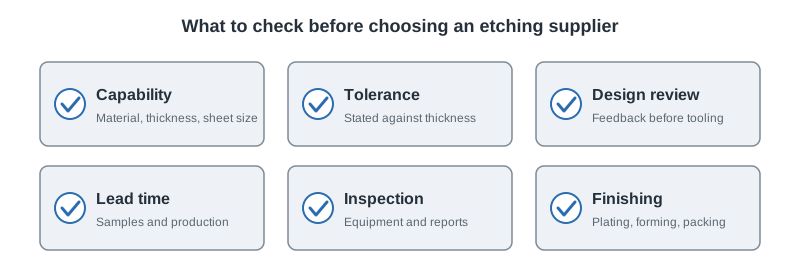
Ten factors to consider
- Materials and grades. Confirm the supplier regularly etches your alloy, not only stainless steel. Titanium, aluminium, nickel alloys and copper alloys each need different chemistry.
- Thickness range. Ask for the thinnest and thickest sheet they etch in your material. Foil below 0.1 mm and plate above 1.5 mm both need suitable handling and equipment.
- Tolerance stated honestly. Etching tolerance depends on thickness. A supplier should quote tolerance for your thickness and part size, not a single best-case figure.
- Design review before tooling. A good supplier checks hole sizes, webs, corner radii and tab positions against the drawing and tells you what to change before making the phototool.
- Tooling cost and ownership. Phototools are inexpensive. Ask what a design revision costs and how long tooling is kept.
- Lead time. Ask separately for sample lead time and production lead time, and whether finishing is included.
- Inspection. Ask what measuring equipment is used, which dimensions are checked and whether an inspection report and material certificate come with the parts.
- Sheet size and capacity. Large panels and long strips need large-format lines. Check the maximum sheet size and how many lines are running.
- Finishing and forming. Plating, passivation, forming and packing arranged by the etcher save you a second supplier and extra handling.
- Communication and confidentiality. Check that engineering questions are answered clearly, that your CAD formats are accepted and that drawings are kept confidential.
Questions to ask before ordering
- What tolerance will you hold on this part in this thickness?
- Is there any feature on my drawing you would change?
- How will parts be held and delivered: loose, tabbed in the sheet or on a carrier strip?
- Which dimensions do you measure, and on how many pieces?
- What is the lead time for samples and for the first production batch?
Warning signs
- A quotation with no questions about a complex drawing.
- A single tolerance figure quoted for every thickness.
- No samples or photos of similar parts.
- No information about the factory, equipment or address.
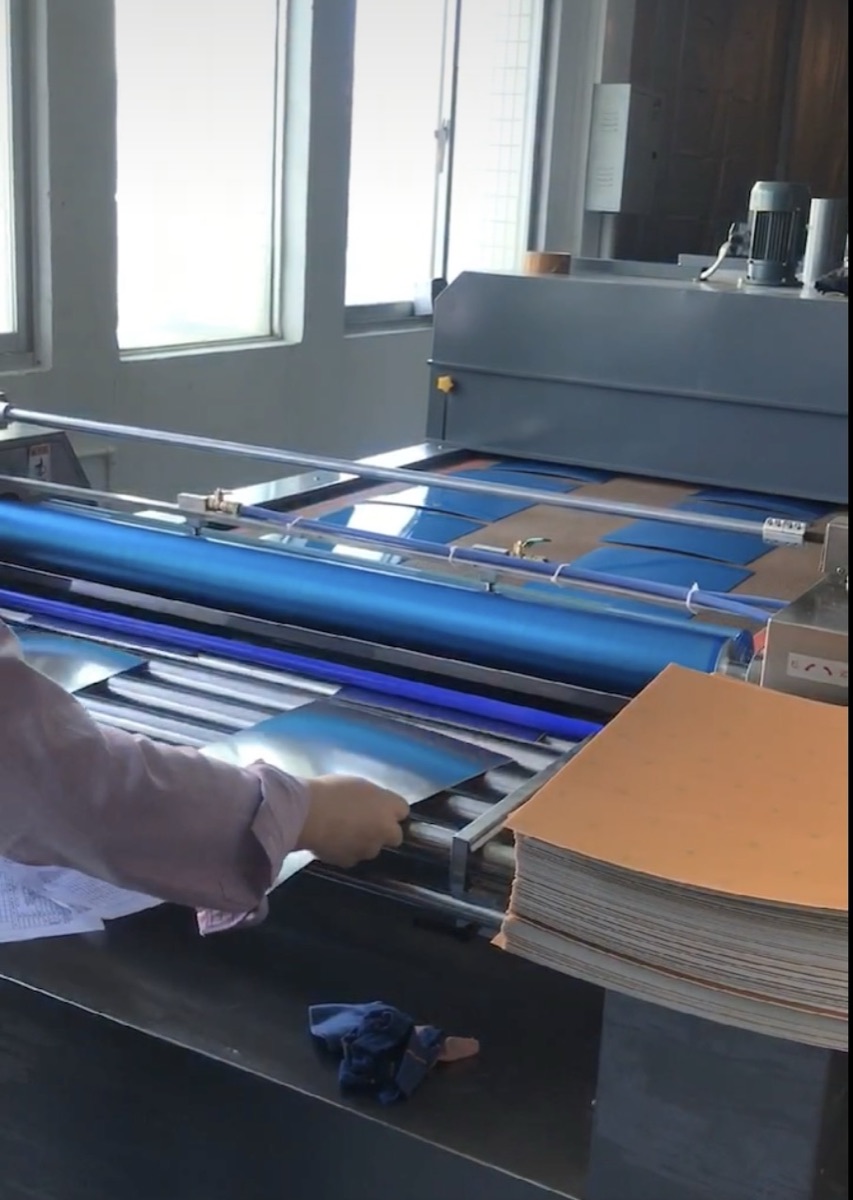
How Golden Eagle compares against this list
- Established in 2003 in Beijing; see about us for the workshop and equipment.
- Stainless steel, copper alloys, nickel alloys, aluminium, titanium and more, from 0.05 mm to 5.0 mm.
- Tolerance can be held to ±0.01 mm, depending on material thickness and part size.
- Drawings are reviewed for manufacturability before tooling.
- Samples typically in 3 to 7 working days.
Useful before you ask for quotes: the design guide, what chemical etching costs and the prototype service.
Request a quote
Send your drawing in DXF, DWG, STEP or PDF format with the material and grade, thickness, quantity and required delivery date through our contact page. We check manufacturability against the drawing before tooling. Sample lead time is typically 3 to 7 working days. Drawings are treated as confidential.
How to choose a chemical etching supplier: FAQ
What factors should be considered when selecting a chemical etching service provider?
Check the materials and thickness range they etch, the tolerance they will hold on your thickness, whether they review the design before tooling, tooling cost, sample and production lead times, inspection methods, sheet size and capacity, finishing options, and how they handle communication and confidentiality.
What should I send to get an accurate etching quote?
A drawing in DXF, DWG, STEP or PDF format, the material and grade, thickness, quantity, any finishing or plating requirement and the required delivery date.
What tolerance should a chemical etching supplier achieve?
It depends on material thickness and part size. On thin material tolerance can be held to ±0.01 mm; it widens as thickness increases. Ask for the figure that applies to your part.
Should I order samples before production?
Yes. Because etching uses a low-cost phototool, samples are inexpensive and fast. They confirm dimensions, edge quality and flatness before a production order is placed.