
Etched car door sill plates and scuff plates
Also sold as scuff plates, door sill guards or entry guards. A door sill plate takes the scuff every time somebody gets in the car, and it carries the model name where the owner sees it every day. Both jobs are decided by how the lettering is made. We etch it into 304 stainless, so the logo is part of the metal rather than a layer on top of it.
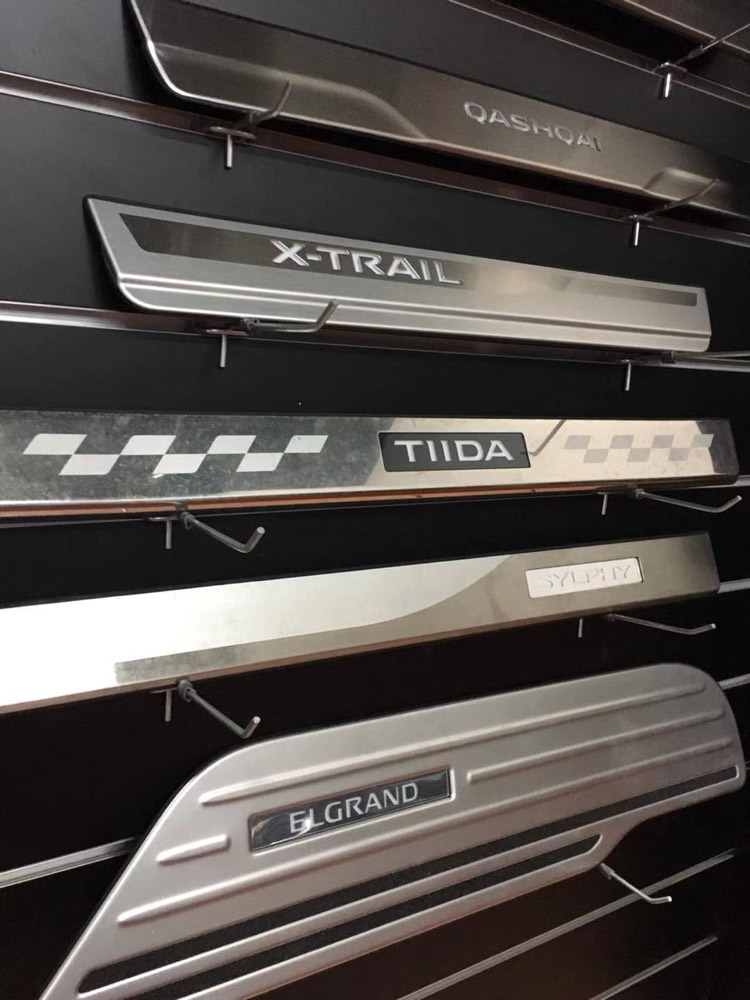
Etched or laser marked: it changes the part
Most sill plates on the market are laser marked. The laser anneals or ablates the surface one line at a time, which is quick for a single logo but has consequences on a part this visible:
- Heat tint. Laser marking puts heat into stainless and can leave a straw or brown cast around the marked area. Chemical etching removes metal cold, so the brushed grain around the logo stays the colour it started.
- Large filled areas. A laser has to raster a solid block line by line, which is slow and shows banding. Etching clears the whole area in the same step as a hairline, so a big recessed logo costs no more than a thin one.
- The whole sheet at once. Etching processes a full sheet of plates together rather than one part at a time, so quantity drives the price down instead of multiplying machine time.
- Depth you can feel. The etched recess takes paint fill, so the model name can be filled black or colour and still be flush and wipeable.
Laser is the better answer for one-off plates and for adding a VIN or serial to a finished part. For a batch of model plates, etching is cheaper and cleaner.
Construction
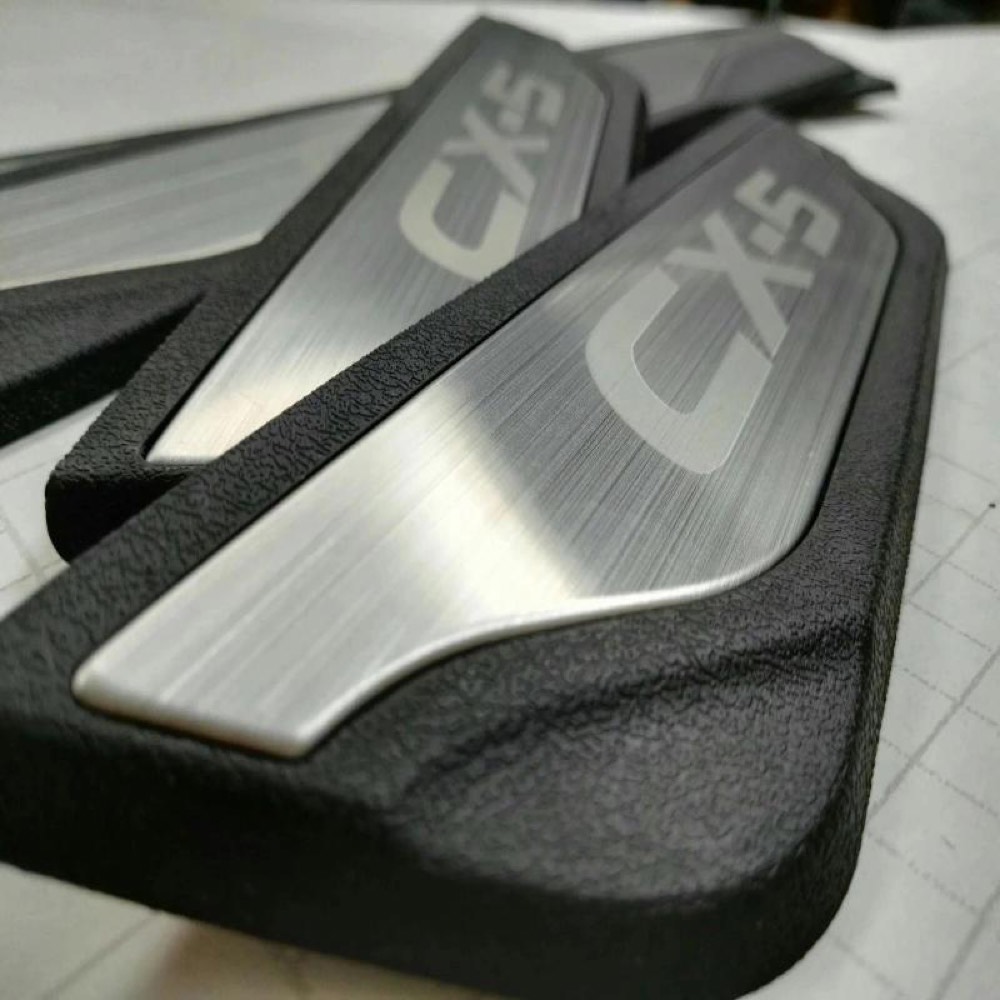
Two builds cover most jobs. A plain stainless plate bonded straight to the sill, which suits flat sills and is the cheapest route. Or a stainless insert on a moulded base, as above, where the base follows the curve and the step of the sill and the metal only has to be flat.
Tell us which you are building. If it is an insert, send the base geometry, because the plate outline has to sit inside the moulded recess with an even reveal all the way round, and that gap is the first thing an inspector looks at.
Finish
| Finish | How the logo reads |
|---|---|
| Brushed (hairline) | Etched recess reads darker than the grain. The default, and the most forgiving of fingerprints |
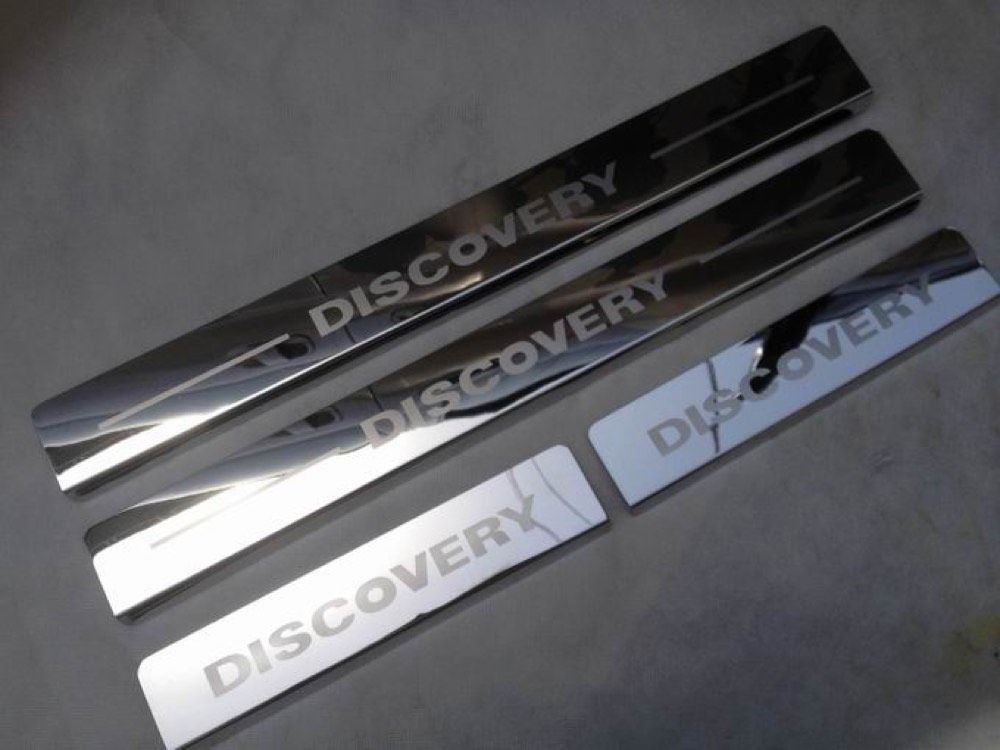
| Mirror polished | Etched area goes matt against the polish, as above. Strong contrast, shows marks more |
| Brushed with paint fill | Recess filled black or a brand colour, flush with the surface |
| PVD coated | Black, gun metal, gold or rose on top of the etched plate |
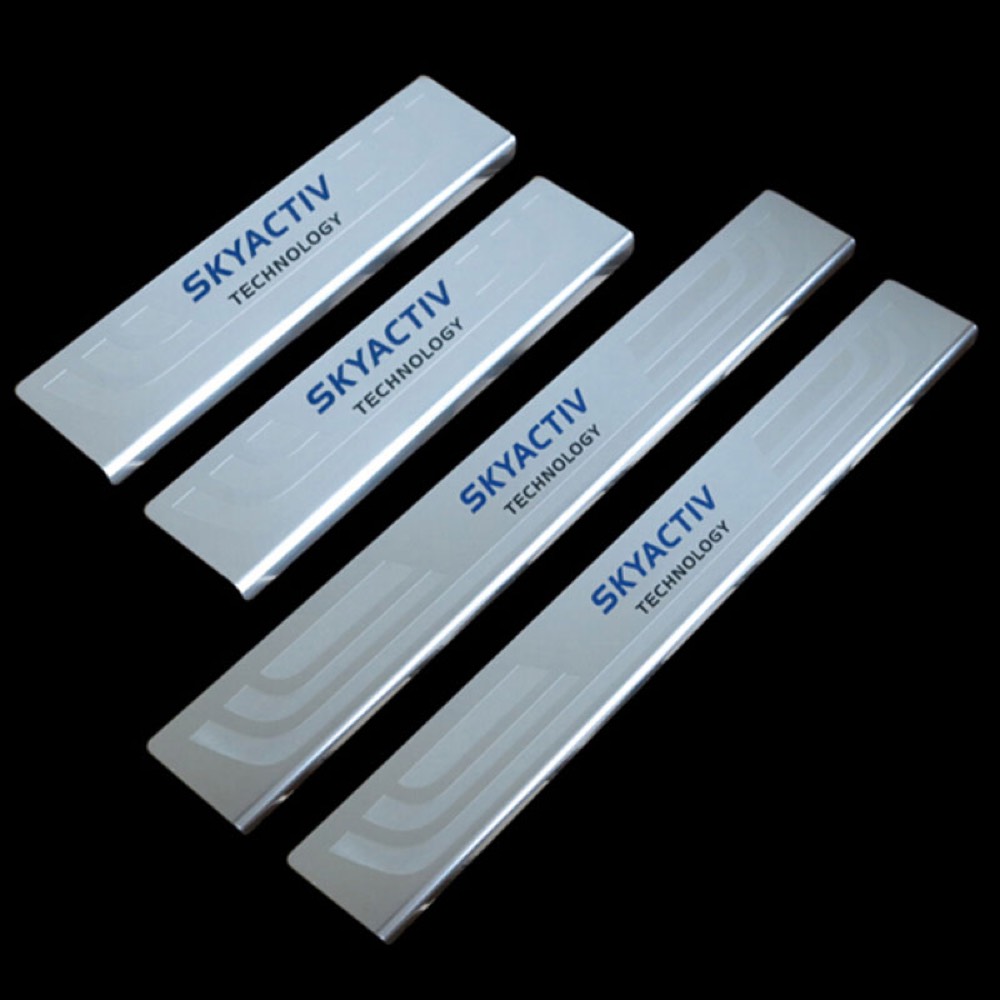
The plate above shows the two depths worth knowing about. The wordmark is etched deep and filled with colour; the pale graphic behind it is etched shallow and left unfilled, so it only shows when the light catches it. Both are on the same artwork and cost the same as a single-depth plate.
Sizes, thickness and fixing
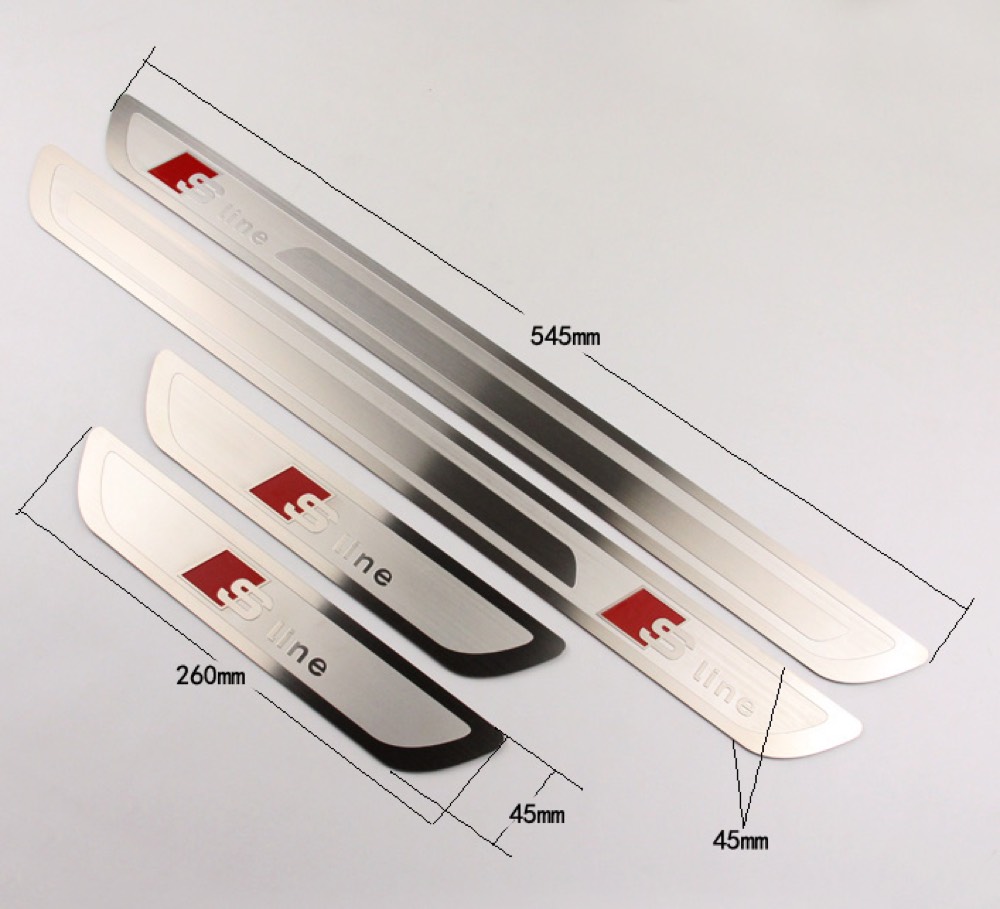
There is no standard size. The set above runs 545 mm at the front and 260 mm at the rear on a 45 mm width, which is representative rather than a specification. Plate thickness is usually 0.5 to 1.0 mm: thick enough not to oil-can underfoot, thin enough to follow a slightly curved sill.
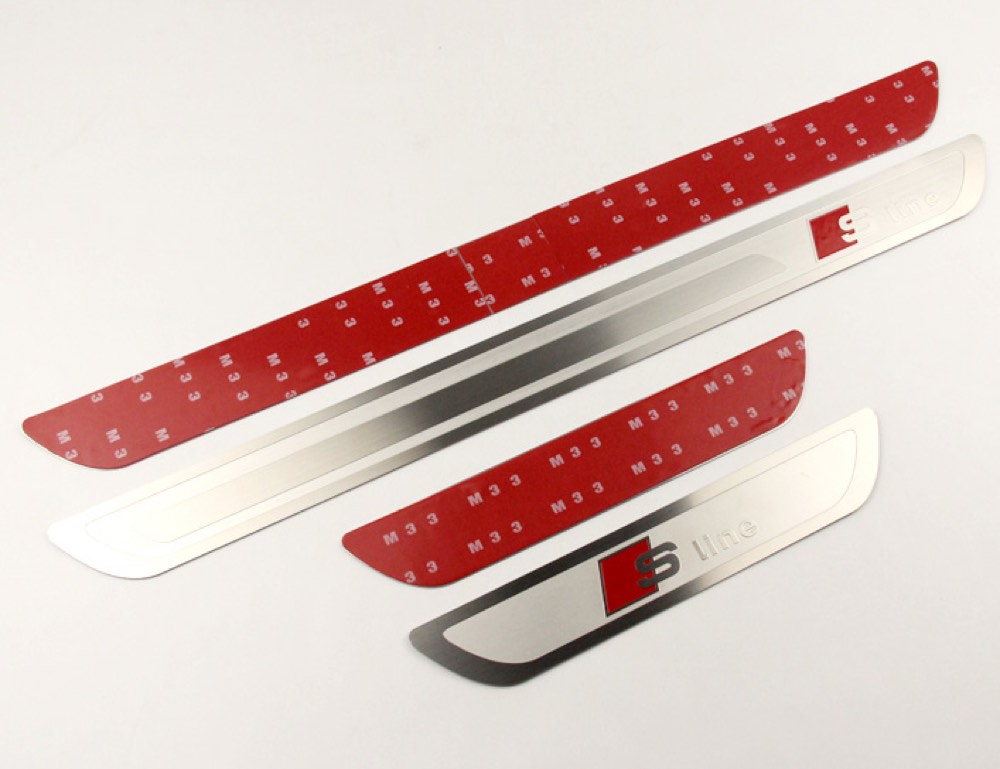
Fixing is almost always double sided adhesive, applied and cut to the outline before shipping so the fitter peels and sticks. Tell us the brand and grade you want on the back if your customer specifies one, and whether the plates ship with the liner tabbed for easier removal.
Ordering a model range
A sill plate programme is rarely one part. It is a front pair and a rear pair per vehicle, across a range of models, each with its own outline and its own name. Etching suits that: the artwork for every model in the range sits on one phototool, so adding a model costs a drawing rather than a press tool.
Send the outlines as DXF or DWG and the logo artwork as AI or PDF, one file per model. Say which models share an outline, because those can be nested on the same sheet. Sample lead time is typically 3 to 7 working days.
Other etched trim strips
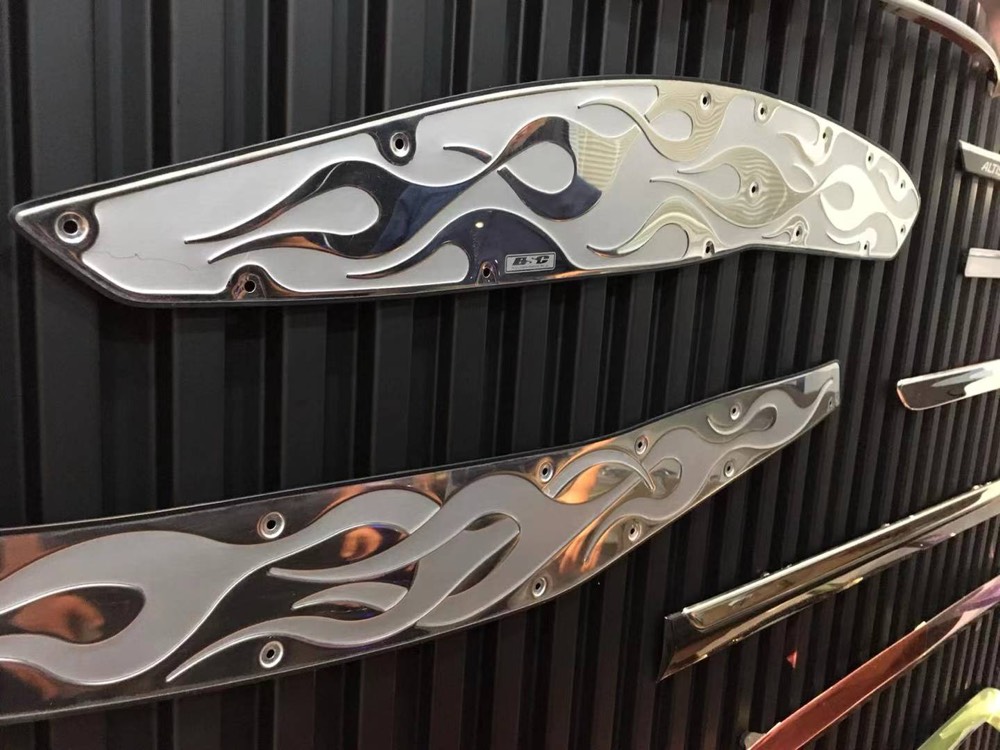
Sill plates are one of a family of long, thin stainless trim parts, and they all run the same way. The strips above have the pattern cut clean through the metal rather than recessed into it, with the countersunk fixing holes etched at the same time as the outline and the cut-outs.
That is the part worth noting if you are costing a trim programme: on an etched part, a through-cut pattern, a recessed logo, the outline and the holes are all one operation. On a pressed part each of those is a separate tool.
Related
- Etched car speaker grilles and acoustic mesh
- Etched car logos and badges
- Chemical etching for the automotive industry
- Paint filled nameplates for how the colour is applied
- Stainless steel etched nameplates for 304 and 316 in detail
Request a quote
Send the plate outlines as DXF or DWG, the logo artwork, the material and thickness, the finish, and whether the plate is bonded direct or sits in a moulded base. Say how many models are in the range and which share an outline. We return a sample before the batch. Sample lead time is typically 3 to 7 working days. Artwork is treated as confidential. Send it through our contact page.
Etched door sill plates: FAQ
Etched or laser marked door sill plates?
Laser suits one-off plates and adding a serial to a finished part. For a batch of model plates, etching is cheaper, puts no heat into the steel so there is no tint around the logo, and clears a large recessed area in the same step as a hairline.
What material and thickness?
304 stainless is standard, usually 0.5 to 1.0 mm. Thicker plates resist flexing underfoot; thinner ones follow a curved sill better.
Can the model name be filled with colour?
Yes. The etched recess takes paint fill, so the name can be black or a brand colour and still sit flush with the surface, which is what lets it be wiped clean without the colour lifting.
Do the plates come with adhesive applied?
Normally yes. Double sided adhesive is applied and cut to the plate outline before shipping. Tell us if your customer specifies a particular brand or grade.
Is there a minimum quantity for a model range?
No hard tooling is involved, so short runs are practical and adding a model to a range costs a drawing rather than a press tool. Models that share an outline can be nested on the same sheet.